Evaluating Hasclaw Harloth for Modern Design Projects
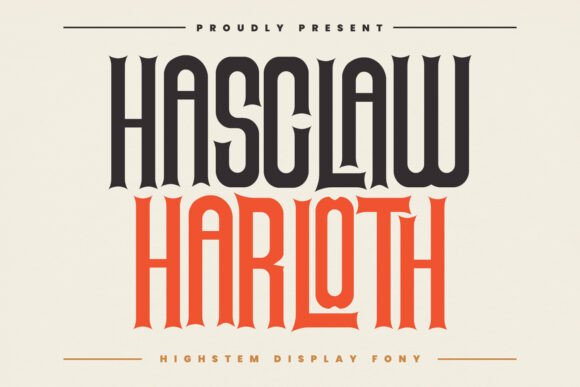
In the crowded landscape of digital typography, finding a typeface that balances distinct personality with functional versatility is a common challenge for designers and brand managers. Hasclaw Harloth has emerged as a notable option for those seeking a specific aesthetic: sleek, modern, and unapologetically bold. Defined by its tall, slim letters and condensed structure, this font operates exclusively in uppercase, offering a sharp, edgy look that commands attention. Understanding whether this typeface aligns with your project goals requires a close examination of its design characteristics, practical applications, and inherent limitations.
Understanding the Design Aesthetic
At its core, Hasclaw Harloth is a display typeface designed to make an immediate visual impact. The decision to restrict the font to capital letters is a deliberate stylistic choice that eliminates the variability of lowercase forms, creating a uniform, block-like presence. This all-caps approach, combined with a condensed width, allows for significant text density without sacrificing legibility at larger sizes. The lines are sharp and clean, avoiding the softness of rounded sans-serifs or the ornamentation of serif fonts. This results in a geometric precision that feels contemporary and industrial.
The "slim" attribute of the letters is crucial to its identity. Unlike heavy, blocky fonts that can feel cumbersome, the slender proportions of Hasclaw Harloth provide a sense of elegance and speed. This makes it particularly effective for brands or projects that wish to convey sophistication alongside strength. The condensed style ensures that even long words or phrases can fit into narrow horizontal spaces, a valuable trait for responsive web design and mobile interfaces where screen real estate is at a premium.
Strategic Applications and Benefits
When evaluating Hasclaw Harloth, it is essential to consider where it performs best. Its primary strength lies in headline usage. For logos, title cards, and hero sections on websites, this font delivers a high-contrast visual hierarchy. It draws the eye immediately, making it an excellent tool for establishing brand identity in competitive markets such as fashion, technology, and luxury goods.
- Brand Logos: The unique silhouette of the condensed capitals helps create memorable logotypes that stand out in digital directories and social media profiles.
- Poster and Print Headlines: In physical media, the sharp lines translate well to large-format printing, maintaining clarity and impact from a distance.
- Digital Banners: The compact nature of the font allows for concise messaging in ad banners where space is limited but impact is required.
Another benefit is its modernity. Trends in graphic design often cycle between retro nostalgia and futuristic minimalism. Hasclaw Harloth sits firmly in the latter category. For companies launching new tech products, innovative services, or contemporary art exhibitions, this font signals forward-thinking values. It avoids the warmth of humanist fonts, opting instead for a cooler, more objective tone that can enhance perceptions of professionalism and precision.
Tradeoffs and Limitations
While the aesthetic appeal of Hasclaw Harloth is strong, it is not a universal solution. The most significant limitation is its exclusivity to uppercase letters. This restriction severely impacts readability in longer texts. Human eyes are accustomed to recognizing word shapes through the ascenders and descenders of lowercase letters. Without these cues, reading speed decreases, and cognitive load increases. Therefore, using this font for body text, paragraphs, or detailed instructions is strongly discouraged. It is strictly a display font.
Additionally, the condensed and slim nature of the letters can pose challenges at smaller sizes. On low-resolution screens or in small print, the thin strokes may disappear or appear fragmented, leading to legibility issues. Designers must ensure that there is sufficient contrast between the text color and the background. Using light gray text on a white background, for example, would likely render the font illegible. High contrast is non-negotiable for maintaining the integrity of the sharp lines.
Contextual Fit: When to Choose Hasclaw Harloth
Deciding to incorporate Hasclaw Harloth into your design system should depend on the specific emotional and functional goals of your project. It is a strong fit when:
- Brevity is key: You need to convey a short, punchy message, such as a tagline or a call-to-action button label.
- Space is constrained: You have a narrow layout column but need the text to remain prominent and readable.
- Edginess is desired: The brand voice is bold, confident, and modern, rather than traditional, warm, or playful.
Conversely, alternatives may be worth considering if your project requires extensive reading, such as blog posts, legal documents, or educational materials. In these scenarios, a serif font or a humanist sans-serif with both upper and lowercase variants would provide a better user experience. Similarly, if the brand identity relies on approachability and friendliness, the sharp, rigid structure of Hasclaw Harloth might feel too cold or aggressive. In such cases, a rounded sans-serif or a softer geometric font might better align with the intended audience perception.
Practical Decision-Making Insights
To determine if Hasclaw Harloth is the right choice, conduct a simple audit of your content strategy. Ask yourself how much text needs to be displayed in this style. If the answer is "headlines only," it is likely a viable candidate. Next, test the font in its intended environment. Render it on various devices, including mobile phones and tablets, to check for rendering issues. Pay close attention to kerning—the space between characters. Condensed fonts often require manual adjustment of kerning pairs to prevent letters from touching or appearing too cramped, which can detract from the sleek look.
Furthermore, consider pairing. Since Hasclaw Harloth is so distinctive, it pairs well with neutral, highly legible body fonts. A clean, standard sans-serif like Roboto or Open Sans can provide a stable foundation that allows the headline font to shine without creating visual chaos. Avoid pairing it with other decorative or condensed fonts, as this can lead to a cluttered and confusing visual hierarchy.
Ultimately, Hasclaw Harloth is a specialized tool. It excels in creating a specific mood—modern, sharp, and bold—but demands careful handling regarding scale, contrast, and context. By respecting its limitations and leveraging its strengths in headline and logo design, you can utilize this typeface to create compelling, contemporary visual identities that resonate with modern audiences. It is not merely a font; it is a statement of style that, when used correctly, enhances the perceived value and modernity of the brand it represents.