Conduck: The Condensed Font for Bold Impact
In the crowded landscape of digital typography, finding a typeface that balances personality with utility is often a challenge. Designers and content creators frequently find themselves toggling between overly decorative scripts that sacrifice readability and sterile sans-serifs that lack character. Enter Conduck, a condensed display font that manages to carve out a distinct niche by offering a masterful blend of compact efficiency and visual flair. It is not merely a tool for saving space; it is a design element capable of elevating creative projects from functional to memorable.
For professionals ranging from marketing managers to independent bloggers, the choice of typography can significantly influence how a message is perceived. Conduck stands out because it was designed with intentionality. It does not try to be everything to everyone. Instead, it focuses on being an incredibly unique condensed display font that brings creative ideas to their highest potential. Whether you are designing a poster, crafting a social media graphic, or branding a new product line, understanding the specific strengths of this typeface can help you make more informed design decisions.
Understanding the Anatomy of Conduck
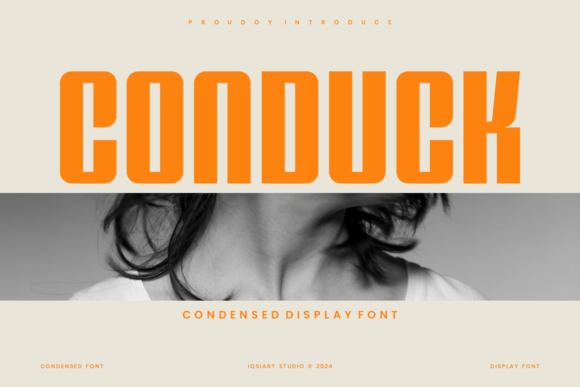
To appreciate why Conduck has the potential to become a true favorite among designers, one must look at its structural qualities. As a condensed font, its primary characteristic is its narrow width relative to its height. This allows for more characters to fit into a horizontal space without reducing the font size to illegible levels. However, many condensed fonts suffer from a cramped, claustrophobic feel. Conduck avoids this pitfall through careful attention to spacing and stroke contrast.
The font features clean, modern lines that maintain clarity even at smaller sizes. Its letterforms are distinct, ensuring that similar characters like "I," "l," and "1" remain easily distinguishable. This attention to detail is crucial for maintaining professionalism in commercial applications. The weight distribution is balanced, providing enough boldness to command attention as a display font while retaining enough subtlety to work in semi-body text roles when used sparingly.
Another notable quality is its versatility in tone. While many display fonts lean heavily into either playful whimsy or rigid corporate seriousness, Conduck sits comfortably in the middle. It feels contemporary and approachable yet authoritative. This duality makes it an excellent choice for brands that want to appear innovative without sacrificing trustworthiness.
Practical Applications Across Industries
The utility of Conduck extends far beyond simple aesthetic appeal. Its design lends itself to a variety of real-world applications where space is at a premium or where visual impact is paramount. Here are several environments where this font shines:
- Digital Marketing and Social Media: In feeds dominated by rapid scrolling, headlines need to grab attention instantly. Conduck’s condensed nature allows for larger font sizes within limited pixel dimensions, making it ideal for Instagram stories, YouTube thumbnails, and Facebook ad creatives.
- Print Packaging and Labels: Product packaging often has strict spatial constraints. Using Conduck enables designers to include necessary product information and branding elements without cluttering the design. It works exceptionally well for beverage labels, cosmetic boxes, and tech gadget packaging.
- Editorial Design: For magazines, newsletters, and zines, Conduck can serve as a striking header font that contrasts beautifully with traditional serif body text. This juxtaposition creates a dynamic visual hierarchy that guides the reader’s eye through the content.
- Web Interfaces and Apps: Modern web design often favors minimalism. Conduck can be used for navigation menus, call-to-action buttons, and section headers, providing a sleek, modern look that enhances user experience without overwhelming the interface.
Enhancing Brand Identity and Communication
Typography is a cornerstone of brand identity. The font you choose communicates subtle cues about your company’s values and personality. Conduck offers a unique opportunity to refine this communication. Because it is both modern and efficient, it suggests a brand that is forward-thinking, organized, and respectful of the audience’s time.
For entrepreneurs and small business owners, consistency is key. Using a distinctive font like Conduck across various touchpoints—from business cards to website banners—creates a cohesive visual language. This consistency builds recognition and trust. When customers see the same typographic style repeatedly, it reinforces brand memory. Furthermore, the readability of Conduck ensures that your message is not just seen but understood, reducing friction in communication.
Consider a freelance photographer looking to update their portfolio website. By using Conduck for project titles and navigation, they convey a sense of modern elegance and precision. The font does not distract from the photographs; instead, it frames them, adding a layer of sophistication that complements the visual art. Similarly, an educator creating online course materials might use Conduck for module headers to create a clear, structured learning path that feels engaging rather than dry.
Best Practices for Implementation
While Conduck is versatile, it is primarily a display font. This means it performs best at larger sizes and in shorter bursts of text. Using it for long paragraphs can lead to reader fatigue due to the condensed letterforms. To get the most out of this typeface, consider the following recommendations:
- Pair Wisely: Combine Conduck with a highly readable serif or a neutral sans-serif for body text. This contrast creates visual interest and ensures that long-form content remains comfortable to read.
- Mind the Kerning: Although well-designed, condensed fonts can sometimes appear too tight depending on the specific letter combinations. Always check kerning pairs, especially in all-caps headlines, to ensure optimal spacing.
- Use Hierarchy: Reserve Conduck for headings, subheadings, and emphasis. Do not use it for fine print or legal disclaimers where legibility at small sizes is critical.
- Experiment with Weight: If the font family includes multiple weights, use heavier weights for primary headlines and lighter weights for secondary information. This adds depth to your design without introducing additional typefaces.
Why Conduck Deserves a Place in Your Toolkit
In an era where attention spans are short and visual competition is fierce, having tools that enhance both efficiency and aesthetics is invaluable. Conduck is not just another font; it is a strategic asset for anyone involved in visual communication. Its ability to condense information without sacrificing style makes it a practical choice for modern design challenges.
Whether you are a seasoned graphic designer looking for a fresh addition to your library or a small business owner aiming to polish your brand’s visual presence, Conduck offers a compelling solution. It bridges the gap between form and function, allowing your creative ideas to resonate more effectively with your audience. By integrating this font into your projects, you are not just choosing a typeface; you are choosing clarity, impact, and a touch of modern elegance.
Ultimately, the right font can transform a good design into a great one. Conduck provides the structural integrity and stylistic nuance needed to achieve that transformation. As you evaluate your next project, consider how this condensed display font might help you communicate more effectively and creatively. It is a small change that can yield significant results in how your work is perceived and received.