Evaluating Pink Brush: A Practical Guide to Its Design and Application
In the crowded landscape of digital typography, finding a display font that balances personality with legibility is often a challenge for designers and content creators. Pink Brush emerges as a distinct option in this category, offering a hand-drawn aesthetic that prioritizes warmth and approachability. Unlike rigid geometric sans-serifs or overly ornate scripts, this typeface occupies a middle ground where casual energy meets structured readability. For professionals managing brand identities, marketing materials, or personal projects, understanding the specific nuances of Pink Brush is essential before integrating it into a workflow.
Defining the Aesthetic and Core Characteristics
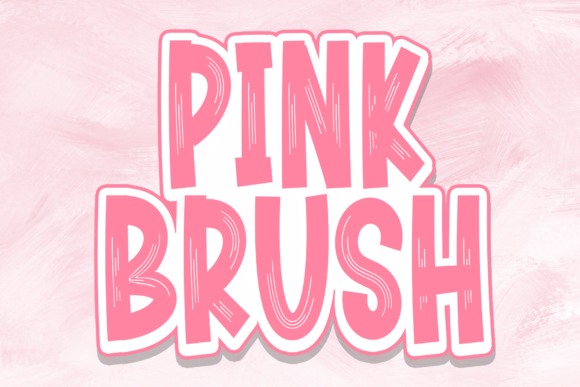
At its core, Pink Brush is a fun and playful display font designed to evoke a sense of immediacy and human touch. The primary visual characteristic is its bold, hand-drawn style, which mimics the texture of a thick marker or brush pen. This texture is not merely decorative; it serves to break the sterile perfection often associated with digital vector graphics, introducing an organic irregularity that feels authentic.
The letterforms are notably rounded, avoiding sharp angles or aggressive terminals. This curvature contributes significantly to its friendly demeanor. Furthermore, the letters are slightly tilted, creating a dynamic baseline that suggests movement and spontaneity. This tilt prevents the text from appearing static, making it ideal for contexts where energy and cheerfulness are desired. However, this stylistic choice also imposes certain constraints on its usage, which will be discussed later regarding legibility and scale.
Practical Applications and Ideal Use Cases
The versatility of any typeface is determined by how well it solves specific communication problems. Pink Brush excels in scenarios requiring a cheerful touch and a direct emotional connection with the audience. Its strengths are most evident in short-form copy rather than long-body text.
- Event Invitations: Whether for birthdays, baby showers, or casual corporate gatherings, the font’s informal nature sets a relaxed tone immediately.
- Poster Design: For community events, workshops, or promotional flyers, Pink Brush captures attention without appearing aggressive. Its bold weight ensures visibility from a distance.
- Social Media Graphics: In an era where visual consistency drives engagement, this font works well for quote cards, announcement headers, and story overlays where brevity is key.
- Packaging and Labels: Small businesses selling handmade goods, artisanal foods, or children’s products can leverage the font’s handcrafted feel to reinforce brand authenticity.
For marketers and entrepreneurs, the value lies in the font’s ability to humanize a brand. It signals that there are real people behind the business, which can be a powerful differentiator in markets saturated with corporate minimalism.
Usability and Technical Performance
When evaluating a font for professional use, technical reliability is as important as aesthetic appeal. Pink Brush demonstrates consistent glyph construction, meaning that the spacing and weight distribution remain stable across different characters. This consistency is crucial for maintaining a polished look, even when the style is intentionally imperfect.
However, users must consider the context of deployment. As a display font, Pink Brush is optimized for larger sizes. When scaled down for body text or footnotes, the brush-like texture may begin to blur, and the slight tilt can reduce reading speed. Therefore, it is recommended to pair Pink Brush with a clean, neutral sans-serif font for supporting text. This combination creates a visual hierarchy that guides the reader’s eye while ensuring that detailed information remains accessible.
The font’s flexibility extends to various color palettes. While the name suggests a affinity for pastels or vibrant pinks, the bold structure holds up well against dark backgrounds or monochrome schemes. This adaptability allows designers to maintain brand consistency even when working within strict color guidelines.
Target Audience and Strategic Fit
Who benefits most from incorporating Pink Brush into their design toolkit? The answer spans several professional demographics, including freelancers, bloggers, educators, and small business owners. These groups often need to produce high-quality visual content quickly without the budget for custom illustration.
For educators and creators of learning materials, the font’s approachable nature can make educational content feel less intimidating, particularly for younger audiences or introductory courses. Bloggers and publishers can use it to highlight pull quotes or section headers, breaking up dense text and adding visual interest.
Conversely, this font may not be suitable for industries requiring strict formality, such as legal services, financial consulting, or high-end luxury goods where minimalism and precision are paramount. In these contexts, the playful tilt and rounded edges might undermine the perceived authority or exclusivity of the brand. Understanding these boundaries is part of effective typographic strategy.
Limitations and Considerations for Long-Term Value
No typeface is universally applicable, and recognizing the limitations of Pink Brush is vital for realistic project planning. Its primary limitation is its specificity. Because it carries a strong personality, it can dominate a design if not used sparingly. Overuse can lead to visual fatigue, where the playful tone becomes distracting rather than engaging.
Additionally, the hand-drawn texture means that it may not render perfectly on all low-resolution screens or print mediums without proper anti-aliasing settings. Designers should always test proofs at actual size to ensure the brush strokes retain their intended clarity. Despite these minor considerations, the font offers significant long-term value due to its timeless appeal. Trends in typography shift rapidly, but the desire for human-centric, authentic design remains constant. Pink Brush fits squarely within this enduring preference.
Final Recommendations for Implementation
To maximize the effectiveness of Pink Brush, consider the following practical recommendations:
- Maintain Adequate Spacing: Due to the bold nature of the letters, ensure sufficient kerning and leading to prevent the text from feeling cramped.
- Limit Line Length: Keep headlines and phrases short. Long sentences in a tilted, hand-drawn font can become difficult to track visually.
- Contrast is Key: Pair the font with simple, geometric elements to balance its organic irregularity. This contrast enhances readability and modernizes the overall look.
- Test Across Mediums: Verify how the font appears on both digital screens and printed materials, adjusting weight or size as necessary to preserve the brush texture.
In conclusion, Pink Brush is a specialized tool that delivers on its promise of a lively and casual feel. It is not a substitute for versatile workhorse fonts but rather a strategic asset for adding character and warmth to specific design elements. For those seeking to infuse their projects with a sense of friendliness and approachability, it represents a reliable and aesthetically pleasing choice. By understanding its strengths and respecting its limitations, designers and creators can leverage Pink Brush to enhance communication and connect more effectively with their audiences.