Choosing Simple Book: A Practical Guide to Clean, Modern Display Typography
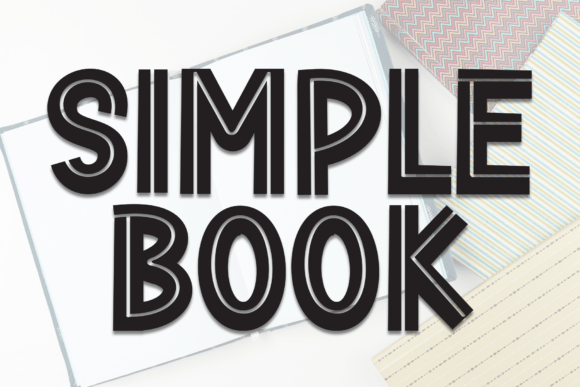
In the crowded landscape of digital design, finding a typeface that balances personality with legibility is often more challenging than it appears. Designers and content creators frequently oscillate between overly decorative fonts that sacrifice readability and sterile, generic sans-serifs that lack character. Simple Book emerges as a compelling middle ground in this spectrum. It is a clean and easy-to-read display font designed for those who value clarity without sacrificing modern aesthetics. With its smooth lines and distinct letter shapes, it offers a bold yet simple style that serves a variety of visual communication needs.
When evaluating typography for headlines, titles, or short-form content, the decision often comes down to how well the font supports the message rather than distracting from it. This article explores the specific attributes of Simple Book, compares it to broader typographic categories, and helps you determine if it is the right fit for your current project.
Defining the Aesthetic of Simple Book
To understand where Simple Book fits in your design toolkit, it is essential to analyze its core characteristics. As a display font, it is not intended for long blocks of body text. Instead, it shines in larger sizes where its structural details can be appreciated. The font features a smooth, modern look that avoids the sharp, aggressive edges found in many industrial-style typefaces. Instead, it opts for rounded terminals and consistent stroke widths, creating a welcoming and approachable vibe.
The clarity of its letter shapes is perhaps its most significant asset. In display typography, ambiguity can be a major pitfall. Letters like 'a', 'e', and 'g' must be instantly recognizable even at a glance. Simple Book achieves this through open counters and generous spacing. This makes it particularly effective for designs that need to communicate quickly, such as social media graphics, poster headers, or website hero sections. The bold yet simple style ensures that the text commands attention without feeling heavy or oppressive.
Comparing Display Styles: Where Simple Book Stands Out
When researching alternatives, you will likely encounter several categories of display fonts. Understanding how Simple Book differs from these groups can help clarify its unique value proposition.
Geometric Sans-Serifs vs. Humanist Touches
Many modern display fonts fall into the geometric category, characterized by perfect circles and straight lines. While these fonts feel precise and technical, they can sometimes appear cold or impersonal. Simple Book, while maintaining a modern structure, introduces subtle humanist touches. The curves are organic rather than mathematically rigid. This distinction is crucial for brands or projects that want to appear professional but also accessible. If your goal is to convey warmth alongside professionalism, Simple Book may offer a better emotional resonance than a strictly geometric alternative.
High-Contrast Serifs vs. Uniform Weight
Another common alternative is the high-contrast serif, often used in fashion or luxury editorial design. These fonts rely on the dramatic difference between thick and thin strokes. While elegant, they can suffer from legibility issues on lower-resolution screens or when viewed from a distance. Simple Book utilizes a more uniform weight distribution. This consistency ensures that the font remains legible across various mediums, from mobile screens to large-format prints. For projects prioritizing immediate comprehension over ornamental elegance, the uniformity of Simple Book is a practical advantage.
Decorative Novelty Fonts vs. Functional Simplicity
Novelty fonts often prioritize uniqueness over function, featuring irregular shapes or thematic elements. While these have their place in specific niche contexts, they rarely offer the versatility needed for broader applications. Simple Book avoids gimmicks. Its "simplicity" is not a lack of design effort but a refined reduction to essential forms. This makes it a safer choice for long-term branding, as it is less likely to feel dated or tied to a fleeting trend compared to highly stylized novelty options.
Best-Fit Use Cases for Simple Book
Identifying the right context for a font is as important as selecting the font itself. Simple Book is versatile within its domain as a display typeface. Here are some scenarios where it performs exceptionally well:
- Digital Headlines: Its clear letter shapes make it ideal for blog titles, news headers, and landing page hooks where readability on backlit screens is paramount.
- Minimalist Branding: For startups or businesses adopting a minimalist aesthetic, Simple Book provides a strong visual identity without clutter. It pairs well with ample white space and limited color palettes.
- Presentation Decks: In slide decks, text must be read quickly. The bold nature of Simple Book ensures that key points stand out, while its simplicity prevents cognitive overload for the audience.
- Packaging and Labels: When space is limited, clarity is king. Simple Book can convey product names or key features effectively, even at smaller display sizes.
Limitations and Tradeoffs to Consider
No typeface is a universal solution. To make an informed decision, you must also recognize where Simple Book may not be the optimal choice. Understanding these limitations prevents misuse and ensures better design outcomes.
First, as a display font, it is not suitable for body copy. Using Simple Book for paragraphs of text will result in poor readability due to its specific proportions and spacing, which are optimized for larger sizes. For body text, you should pair it with a complementary sans-serif or serif font that offers better flow and rhythm for extended reading.
Second, if your project requires a sense of tradition, heritage, or formal authority, Simple Book’s modern and casual demeanor might feel too relaxed. Industries such as law, finance, or academic publishing often lean towards traditional serifs to convey stability and history. In these contexts, the smooth, contemporary look of Simple Book might be perceived as too informal.
Finally, consider the competitive landscape of your industry. Because clean, modern sans-serifs are popular, there is a risk of blending in if not used creatively. While Simple Book has distinct characteristics, it shares DNA with many other modern typefaces. To stand out, you may need to rely on creative layout, color usage, or pairing strategies rather than the font alone carrying the entire visual weight.
Decision Factors: Is Simple Book Right for You?
Choosing a font is ultimately about alignment with your communication goals. Ask yourself the following questions to evaluate if Simple Book meets your needs:
- What is the primary medium? If you are designing primarily for digital screens or short-print formats, the legibility and modern appeal of Simple Book are strong assets. If you are working on long-form print publications, look elsewhere for body text solutions.
- What is the brand personality? Does your brand value approachability, clarity, and modernity? If so, Simple Book aligns well. If your brand is rooted in luxury, tradition, or avant-garde experimentation, you may need a more specialized typeface.
- How much flexibility do you need? Simple Book is excellent for headlines and titles. Ensure you have a secondary font for supporting text. A good typographic system relies on contrast; pairing Simple Book with a neutral, highly legible body font creates a balanced hierarchy.
Integrating Simple Book into Your Workflow
Once you decide that Simple Book fits your project, implementation matters. To maximize its impact, consider using it in all-caps for short, punchy statements, or in sentence case for a friendlier tone. Experiment with tracking (letter-spacing); slightly increasing the spacing can enhance its airy, modern feel, while tighter spacing can create a more compact, urgent look.
Color also plays a vital role. Because Simple Book has clear, bold shapes, it handles high-contrast color combinations well. However, it also works subtly in monochrome or pastel palettes, maintaining its integrity without needing heavy visual reinforcement.
In conclusion, Simple Book represents a thoughtful option for designers seeking a balance between modern aesthetics and functional clarity. It is not merely a generic sans-serif but a carefully crafted display font that prioritizes user experience through legibility. By understanding its strengths in headline applications and acknowledging its limitations in body text, you can leverage Simple Book to create designs that are both visually appealing and effectively communicative. Whether you are refreshing a brand identity or designing a new digital campaign, this font offers a reliable, clean foundation for your creative work.