Colour Rainbow: Evaluating the Role of Playful Typography in Modern Design
In the vast landscape of digital typography, finding a typeface that balances personality with legibility is often a challenge for designers and hobbyists alike. Colour Rainbow emerges not merely as a font file, but as a distinct stylistic choice that bridges the gap between casual handwriting and professional display typography. For creatives working on projects that require an immediate emotional connection—such as wedding invitations, greeting cards, or boutique branding—understanding the nuances of this specific aesthetic is crucial. This article explores what makes this handwritten display font distinct, how it compares to other typographic styles, and when it serves as the optimal choice for your creative toolkit.
Defining the Aesthetic of Colour Rainbow
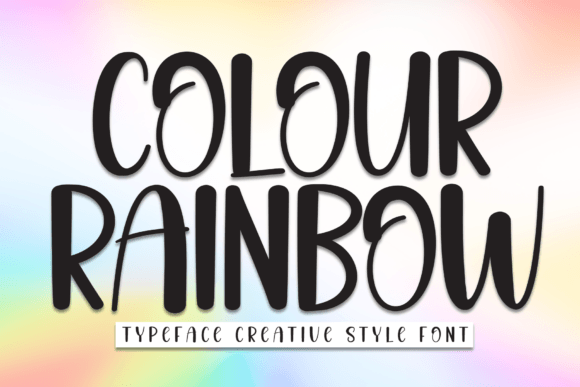
At its core, Colour Rainbow is characterized by its charming handwritten quality. Unlike rigid sans-serif fonts or traditional serifs that convey authority and structure, this typeface exudes warmth and friendliness. The letterforms are designed with an adorable and playful nature, featuring irregular strokes and organic curves that mimic the natural flow of a pen on paper. This authenticity is what allows the font to infuse creations with a delightful touch that feels personal rather than manufactured.
The "display" classification is significant here. Display fonts are intended for use at larger sizes, such as headlines, titles, and short bursts of text. They are not designed for body copy. Colour Rainbow leverages this by maximizing visual impact through its unique aesthetic. The balance it offers is delicate; it provides a dash of fun without descending into illegibility or childishness, making it suitable for adult-oriented designs that still wish to appear approachable and inviting.
Comparative Analysis: Handwritten vs. Structured Typography
When evaluating typography options, it is helpful to categorize them by their primary function and emotional resonance. Handwritten display fonts like Colour Rainbow occupy a specific niche that differs significantly from other common categories.
- Script Fonts: Traditional scripts often aim for elegance and formality, mimicking calligraphy. While beautiful, they can sometimes feel distant or overly formal. In contrast, Colour Rainbow offers a more relaxed, contemporary vibe that feels like a note from a friend rather than a formal decree.
- Geometric Sans-Serifs: These fonts are prized for their clarity and modernity. However, they often lack emotional warmth. If a project requires a human touch, a geometric sans may feel too cold or corporate. Colour Rainbow fills this gap by introducing organic imperfections that humanize the design.
- Novelty Fonts: Many playful fonts sacrifice readability for gimmickry. A key strength of Colour Rainbow is its restraint. It maintains enough structural integrity to be read easily, ensuring that the message is not lost in the style.
This comparison highlights that Colour Rainbow is not a universal solution but a specialized tool. It is best suited for contexts where the tone of the message is as important as the content itself.
Practical Applications and Best-Fit Scenarios
Understanding where to apply this font is essential for maximizing its effectiveness. The enchanting essence of Colour Rainbow shines brightest in projects that celebrate personal milestones or seek to create a welcoming atmosphere.
Wedding Invitations and Event Stationery
Modern weddings often move away from stiff formality toward celebrations that reflect the couple's personality. Using Colour Rainbow for names, dates, or headers on invitations can soften the overall design. It suggests a celebration that is joyful and intimate. However, it should be paired with a clean, simple secondary font for the logistical details (time, location, RSVP) to ensure clarity.
Greeting Cards and Personal Correspondence
For greeting cards, the goal is often to convey emotion quickly. The adorable nature of this font enhances the sentiment, whether it is a birthday wish, a thank-you note, or a congratulatory message. The playful strokes add a layer of sincerity that standard typed text often lacks.
Boutique Branding and Packaging
Small businesses, particularly those in the artisanal, food, or children’s sectors, benefit from typography that feels handcrafted. Colour Rainbow can be used effectively on packaging labels, social media graphics, or logo variations where brand friendliness is a key value proposition. It signals to the consumer that the brand is approachable and cares about the personal touch.
Limitations and Tradeoffs to Consider
While Colour Rainbow offers significant aesthetic benefits, it is not without limitations. A balanced evaluation requires acknowledging when this font may not be the right choice.
- Readability at Small Sizes: As a display font, the intricate details of the handwritten style can blur or become difficult to decipher when scaled down. It should never be used for paragraphs of text, legal disclaimers, or small print.
- Contextual Appropriateness: The playful and warm nature of the font may clash with serious or somber topics. It is generally unsuitable for corporate financial reports, medical documentation, or high-end luxury branding that relies on minimalism and exclusivity.
- Pairing Challenges: Because Colour Rainbow has a strong personality, it demands careful pairing. Combining it with another decorative or handwritten font can create visual chaos. It works best when anchored by a neutral, structured typeface.
Making an Informed Decision
Choosing the right typography is a strategic decision that impacts how your audience perceives your message. When considering Colour Rainbow, ask yourself the following questions:
- Does my project require a tone of warmth and approachability?
- Is the text limited to headlines, titles, or short phrases?
- Am I aiming to create a personal connection with the viewer?
If the answer to these questions is yes, then Colour Rainbow is likely a strong candidate. Its ability to captivate the audience through its charming and friendly demeanor makes it a valuable asset for specific design needs. However, if your project demands strict neutrality, high-density information delivery, or formal authority, you may need to explore more structured alternatives.
Ultimately, the allure of Colour Rainbow lies in its balance. It offers a unique aesthetic that is fun yet refined, playful yet clear. By understanding its strengths and respecting its limitations, designers can harness its potential to add an enchanting essence to their creative work. Whether you are designing a wedding suite that needs to feel intimate or a greeting card that needs to feel genuine, this font provides the tools to communicate not just words, but feeling. Experience the difference it makes by testing it in your next project, always keeping the end-user’s experience and readability in mind.