Ariada: A Practical Look at a Retro Groovy Display Font
In the crowded landscape of digital typography, finding a display typeface that balances personality with professional usability can be a challenge. Designers often face a trade-off between bold, character-driven fonts that capture attention and versatile tools that integrate smoothly into complex layouts. Ariada emerges as a compelling solution in this space, positioning itself as a dreamy, hand-drawn display font with distinct retro groovy aesthetics. For creatives, marketers, and small business owners looking to inject warmth and nostalgia into their visual communications, understanding the specific capabilities and limitations of Ariada is essential before integrating it into a workflow.
Defining the Aesthetic and Core Characteristics
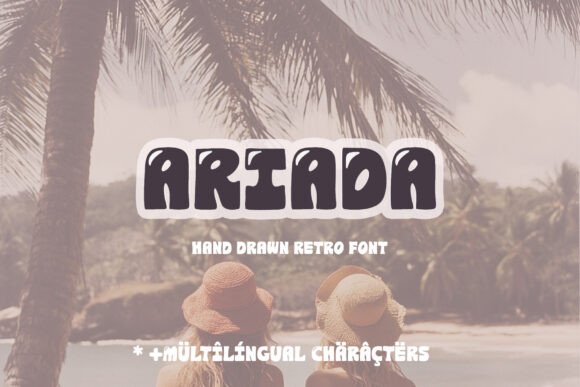
Ariada is not designed for body text or long-form reading. Instead, it serves as a display font, meaning its primary function is to command attention in headlines, logos, posters, and short phrases. The typeface draws heavily from the design trends of the 1970s, characterized by rounded terminals, fluid curves, and a relaxed, organic feel. This "groovy" vibe is achieved through careful hand-drawing techniques that avoid the sterile perfection of geometric sans-serifs, offering instead a human touch that feels approachable and authentic.
The font’s versatility stems from its extensive support for ligatures and stylistic alternates. Ligatures are special character combinations that replace standard letter pairs with more aesthetically pleasing forms, while stylistic alternates provide different versions of individual letters. In Ariada, these features allow users to customize the flow and density of their text. For instance, a designer might choose a tighter ligature for a compact logo or a more open alternate for a spacious banner. This level of control ensures that the font does not look repetitive, even when used across multiple projects.
Practical Applications in Modern Design
While the retro aesthetic might suggest niche usage, Ariada demonstrates surprising flexibility in contemporary contexts. Its soft, rounded forms make it particularly effective for brands aiming to convey friendliness, creativity, or comfort. Here are several practical scenarios where Ariada performs well:
- Branding and Identity: For cafes, boutiques, wellness studios, or creative agencies, Ariada can serve as the cornerstone of a logo system. Its unique character helps differentiate a brand from competitors using generic corporate fonts.
- Packaging Design: Product packaging often requires typography that stands out on shelves while communicating quality and care. The hand-drawn nature of Ariada suggests artisanal craftsmanship, making it suitable for organic foods, handmade cosmetics, or craft beverages.
- Social Media Graphics: In an era where visual content must capture attention quickly, Ariada’s bold presence works well for Instagram posts, Pinterest pins, and YouTube thumbnails. It adds visual interest without overwhelming the image.
- Editorial Headers: Magazines, blogs, and newsletters can use Ariada for article titles to break up monotony and add a touch of personality. However, it should be paired with a clean, readable serif or sans-serif for the body text to maintain legibility.
The key to successful implementation lies in restraint. Because Ariada is highly decorative, it works best when given ample white space. Overcrowding the layout with too much text in this font can reduce readability and diminish its impact.
Evaluating Usability and Technical Performance
From a technical standpoint, the value of a font like Ariada is determined by how easily it integrates into design software and how consistently it renders across different media. The inclusion of numerous ligatures and alternates is a significant strength, but it also requires a certain level of typographic knowledge to utilize fully. Designers working in Adobe Illustrator, Photoshop, or InDesign will find these features accessible through the OpenType panel. For those using web-based design tools, compatibility may vary, so testing is recommended.
Consistency is another critical factor. Hand-drawn fonts can sometimes suffer from irregular stroke weights or awkward spacing between certain letter pairs. Ariada appears to have been carefully refined to minimize these issues, offering a balanced rhythm that holds up well at various sizes. However, users should always review kerning manually, especially for custom logotypes, to ensure optimal visual harmony.
Reliability in digital formats is also worth noting. When used on websites, Ariada should be embedded using proper web font protocols to ensure fast loading times and crisp rendering on high-resolution screens. Its vector-based origins mean it scales infinitely without loss of quality, which is crucial for responsive design where elements must adapt to mobile, tablet, and desktop views.
Who Benefits Most from Ariada?
Not every project requires a retro groovy font. Understanding the target audience for Ariada helps determine whether it is the right tool for your needs. The following groups are likely to find the most value in this typeface:
- Freelance Designers and Creatives: Those who need a distinctive font for client projects in lifestyle, fashion, or entertainment sectors will appreciate Ariada’s ability to set a specific mood quickly.
- Small Business Owners: Entrepreneurs managing their own marketing materials can use Ariada to create cohesive branding across business cards, signage, and online ads without hiring a dedicated typographer.
- Content Creators and Bloggers: Individuals producing visual content for social media or personal brands can use Ariada to establish a recognizable visual identity that feels personal and engaging.
- Educators and Publishers: For materials aimed at younger audiences or creative subjects, Ariada can make headers more inviting and less intimidating than traditional academic fonts.
Conversely, industries requiring strict formality, such as law, finance, or healthcare, may find Ariada too casual. In these contexts, clarity and neutrality are prioritized over personality, making simpler sans-serif or serif fonts more appropriate.
Limitations and Considerations
While Ariada offers many strengths, it is important to acknowledge its limitations. As a display font, it is not suitable for body copy. Attempting to use it for paragraphs or small print will result in poor readability and viewer fatigue. Additionally, its strong stylistic identity means it may clash with other decorative elements. Pairing Ariada with equally ornate fonts can create visual chaos; instead, it should be balanced with neutral, understated typefaces.
Another consideration is trend sensitivity. While retro styles have enduring appeal, they can also date a design if not handled thoughtfully. To ensure long-term value, designers should focus on timeless applications, such as core branding elements, rather than fleeting promotional campaigns. Using Ariada in moderation helps maintain its freshness and prevents it from becoming visually exhausting.
Final Thoughts on Value and Integration
Ariada represents a thoughtful addition to any designer’s toolkit, offering a blend of nostalgic charm and modern functionality. Its success lies in its ability to convey emotion and personality while remaining technically robust enough for professional use. For those seeking to add a human touch to their digital or print projects, Ariada provides a reliable and versatile option.
Before committing to a purchase or download, it is advisable to test the font in your specific workflow. Create sample designs, experiment with ligatures, and evaluate how it pairs with your existing brand colors and imagery. By approaching Ariada with a clear understanding of its strengths and constraints, you can leverage its potential to create impactful, memorable designs that resonate with your audience. In a world saturated with generic typography, a well-chosen display font like Ariada can be the difference between being overlooked and being remembered.